Six Years Sharper, Bold Moves Ahead
- Matthew Doty
- Aug 18, 2025
- 5 min read

Nearly six years ago, I left a comfortable, high-impact role in corporate design leadership to chase something bolder. I launched XDGO! to help organizations build and scale their human-centered design capabilities. Not just to make things prettier or easier to use, but to create momentum, embed design at the heart of strategy, and unlock meaningful change.
I did not realize it then, but I had just enrolled in the most intense, immersive design challenge of my life: entrepreneurship in a pandemic. What felt like the worst timing turned out to be the perfect sharpening stone.
This is the story of what sharpened me, the lessons that stuck, and where I am headed next.
Blazing Trails in a Shifting Jungle

In early 2020, I launched XDGO! with a simple vision: help organizations work smarter, faster, and more humanely through design. A few months later, the world hit pause.
Leads dried up. Budgets froze. And I got to experience the unique thrill of launching a company just as the world shut down.
Every stalled conversation, every frozen budget, every "let’s revisit this next quarter" was honing something I did not yet understand. It took almost a year to land that first client, but once the momentum kicked in, it really kicked in. Over the next five years I partnered with scrappy startups, mission-driven scale-ups, and Fortune 100 giants. We redefined customer experiences, unlocked alignment, and helped design teams shift from “support” to “strategy.”
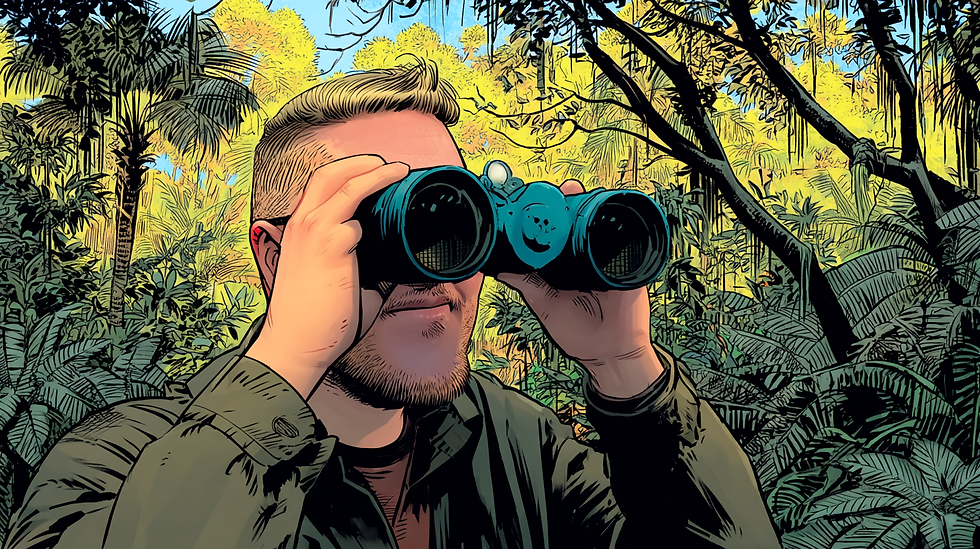
A client once told me that working with me felt like navigating a jungle with someone who had a machete and knew exactly where to swing it. That metaphor stuck, because it describes how I see the work. Clearing paths through organizational complexity. Removing the undergrowth that tangles teams. Helping leaders avoid common pitfalls. Creating clarity where there was once chaos.
Human-centered design is not about tools, templates, or speed. It is about momentum. Shared direction. Smart decisions made by real humans across departments and disciplines. That kind of momentum does not “just happen.” It materializes when people feel confident, curious, and clear about what really matters. That has been the heartbeat of XDGO! Not just sparking transformation but sustaining it.
What the Jungle Taught Me

Six years. Four major clients. Hundreds of mentoring sessions. More lessons than I can count. And the sharpest ones came from tension. From watching what slows teams down, what breaks momentum, and what quietly kills good design.

On AI: Like many, I started skeptical. Then I got curious. And then I got good. I learned how to use AI to accelerate research, tighten communication, and jumpstart strategy. But the biggest unlock was not technical, it was cultural. Teams moved faster and thought more clearly when they treated AI as a collaborator. Not a gimmick. Not a shortcut. A starting point. Anchoring AI to human needs instead of novelty became one of the sharpest tools in my kit.

On fear: At one client, a team member stayed silent in meetings for months. She had insights that could have saved the team six months of work, but she convinced herself they were not polished enough. Through a mix of team interventions and coaching, that changed. Her perspective became the foundation for one of their most successful launches. Fear does not just block creativity. It blocks momentum. If you want better work, you need safer rooms.

On ego: I watched a senior leader wave off user feedback that did not match his assumptions. Three quarters later, the product flopped. That same feedback became the roadmap for their pivot. Ego creeps in everywhere. The more I saw it, the faster I became at spotting it, and the better I got at helping teams cut through it. Nobody is the smartest person in the room. The sooner that becomes a strength instead of a threat, the better off everyone is.
And then there were the patterns. Across every client, the same truths kept showing up. The teams that made real impact were the ones where:
People saw their own potential and believed in it.
Collaboration stopped being performative and started being real.
Putting people first became the foundation everything else could stand on.
These were not just one-off lessons. They became my jungle map. They shaped how I lead, how I build, and what I am looking for next.
Same Mission, Sharper Focus
My mission has not changed: help people understand and embrace human-centered design. What has changed is my edge. The ability to cut through complexity and create momentum has been deeply refined.
The last few years tested the industry’s commitment to human-centered design. Budgets shrank. Teams were cut. Suddenly “good enough” design was back on the table, and so was “good enough” design leadership. That pressure did not dull my edge. It honed it.
At the same time, my curiosity expanded beyond traditional design boundaries. The transformation work I have always done with teams led to deeper questions. How do humans build better relationships in uncertainty? How do we find clarity in chaos? How do we grow through change instead of just survive it?
Last year I began exploring those questions intentionally. I studied formal coaching methodologies. I dug into behavioral change. I worked with individuals on the inner work that makes outer transformation possible. That was not sharpening the same blade. It was adding new tools altogether. Recognizing that human-centricity includes ourselves, and that our capacity for resilience directly impacts what we build.
And through all that, one truth became clear. While consulting through XDGO! has been meaningful, it is not the kind of impact I am built for long term. I am at my best inside an organization. Building with a team. Shaping culture. Scaling what works. Making design matter.
Ready to Make a Deeper Impact

Over the last year, my curiosity has been pulling me in two bold directions. One is professional, the other more personal. Both are rooted in the same mission I have carried all along.
The first bold move: I am returning to full-time, in-house design leadership. I am actively seeking roles with organizations that want design to be a capability, not decoration. Where strategy is lived, not laminated. Where AI amplifies human insight instead of replacing it. Where complexity is high and teams are hungry to solve it.
I am particularly drawn to mental health, healthcare, and other mission-driven spaces. These are areas where human-centered design is not just good business. It is essential work.
I have built my career on moving teams from insight to impact, and now I am ready to put that edge to work inside an organization where the stakes are real and the outcomes matter.
As for the second bold move, I am not ready to share the details yet. It is grounded in the deeper transformation work I have been exploring: the intersection of design thinking, behavioral change, and human potential. It is already shaping how I lead, and when the time is right, I will have more to say. For now, know this: it will amplify everything I do as a design leader.
What’s Next

This transition is both a return and an evolution. I am doubling down on in-house design leadership while continuing to explore what helps individuals shine and organizations thrive.
Nearly six years have sharpened my ability to cut through complexity and create momentum where it matters most. Now I am ready to put that edge to work, alongside a team that is ready to build what is next.
If you are building a team, a culture, and a product that reflects these values, let’s talk. I am ready to dive in.
And if this sparked something in you—about your own path, the teams you are building, or where this industry might be heading—I would love to hear it.